We run early-phase trials for emerging sponsors at the level a large sponsor would — design, endpoints, analysis, regulatory strategy, execution. Not software for running a CRO, but a new kind of CRO.
The problem
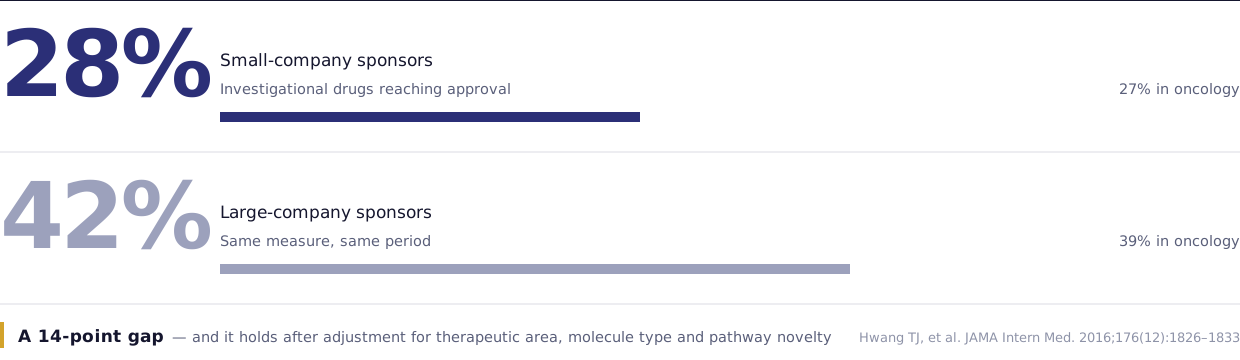
A large sponsor employs statisticians, programmers and data engineers full time and spreads them across dozens of trials. A biotech running one trial cannot justify a single one of those hires. So every question goes out to a consultant, one question at a time, and the answer comes back weeks later — by which point the decision has usually already been made.
What we do
Two kinds of company serve this market, and neither does both jobs. Software vendors build the systems but never run a trial. CROs run the trial but license their systems from someone else, and have neither the engineering capacity nor any commercial reason to extend them.
License platforms to the organisations that run trials, and never operate a study themselves. Their analytical layer sits at maximum distance from the work.
Execute the trial, but license their systems from someone else. Expertise scales with headcount, so the economics are bounded by what an FTE bills.
Operates the study on systems it builds and owns. Work a conventional CRO staffs with hours is delivered by software — and it improves with each study.
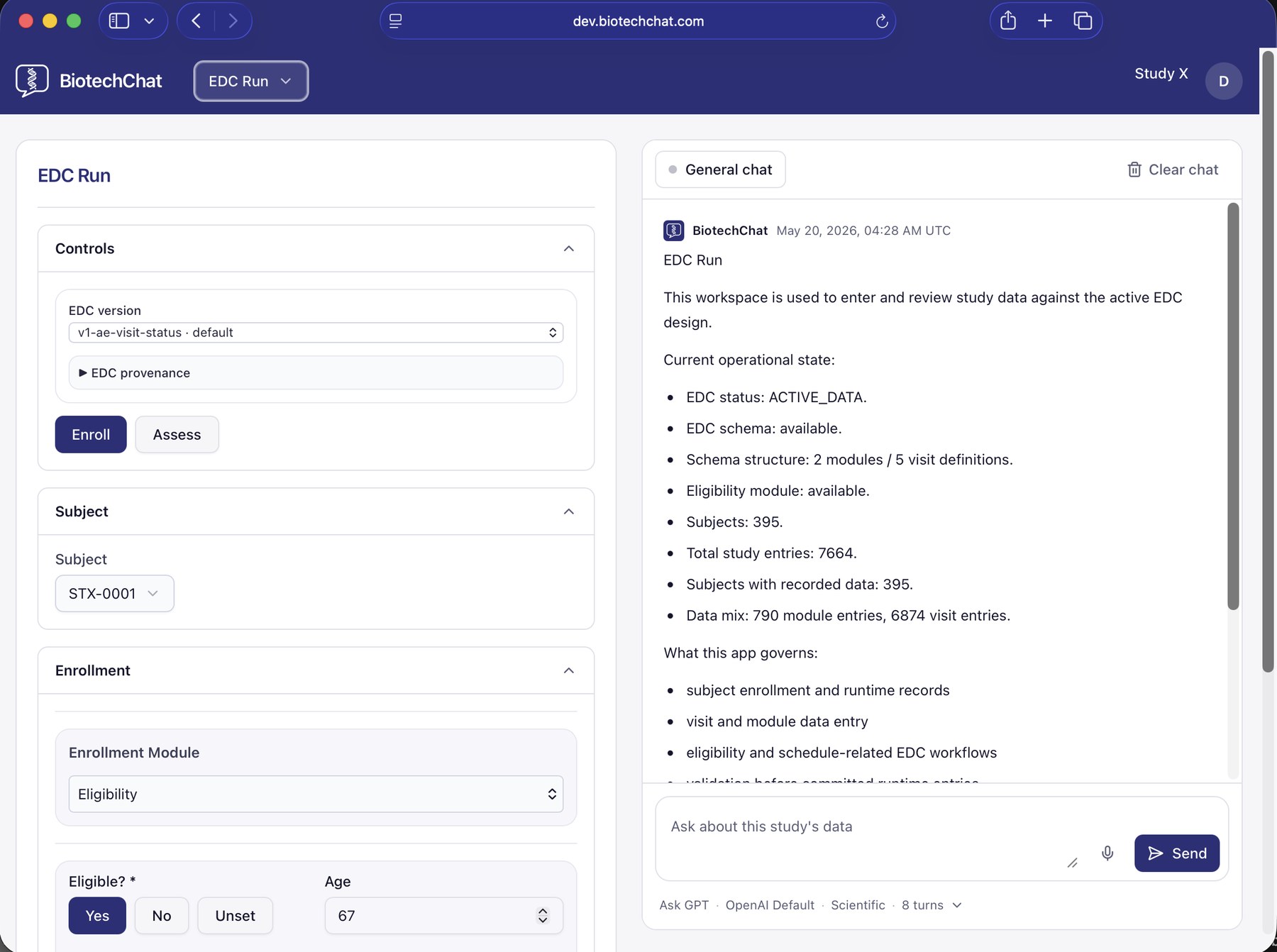
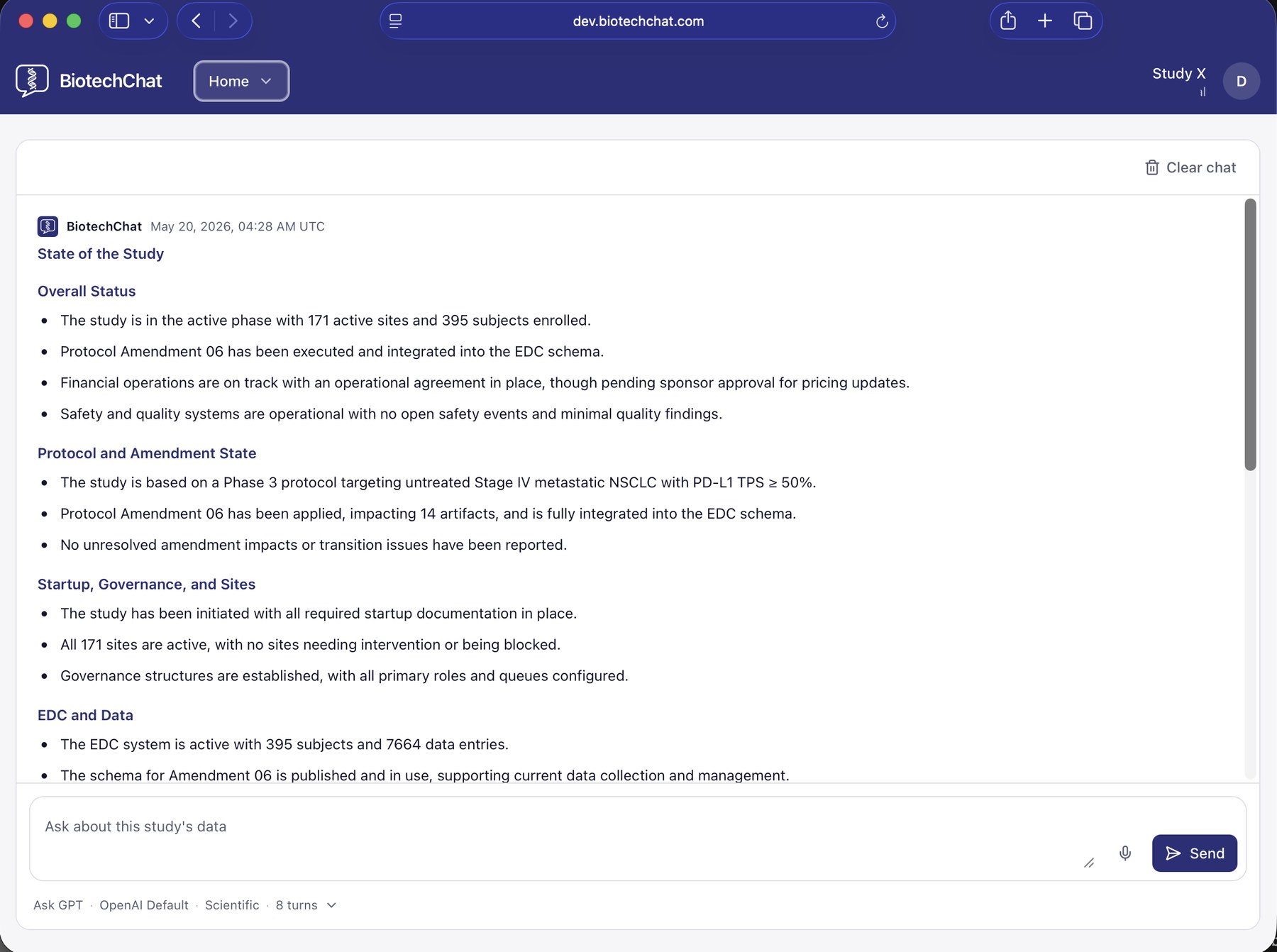
How a trial runs
Every stage of the study, who touches it, and what it writes to.
Your own people. No intermediary, no ticket.
One system. We build it, we run it.
Generated from the protocol
The platform
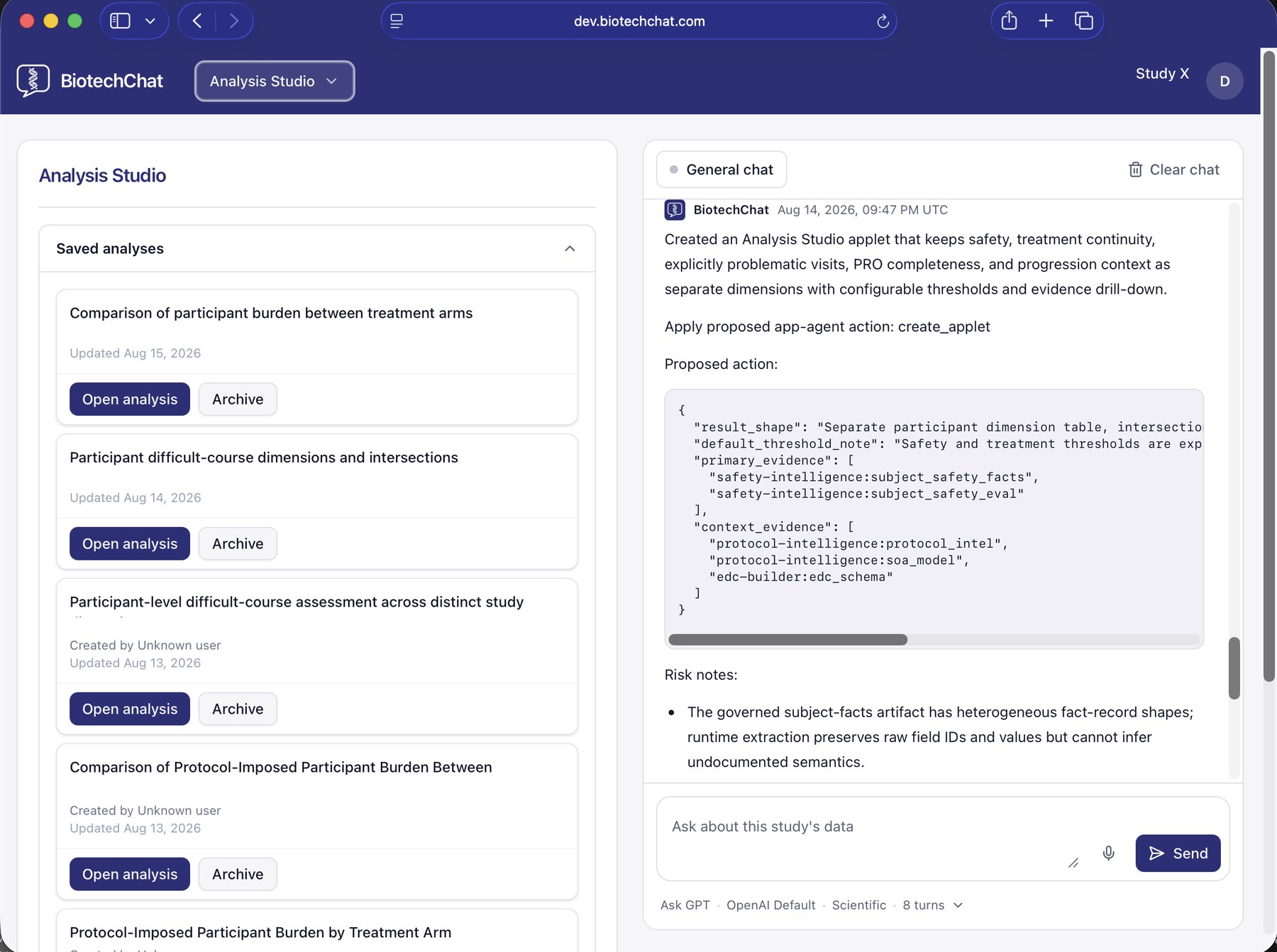
The hard part was never the AI. It is the governance underneath it.
Every governed artifact is versioned, hashed, and traceable to its source and its full history.
Agents propose. Deterministic executors apply. The model never gets the last word.
Every operation is read against the protocol version in force at the time. History stays history.
21 CFR Part 11 electronic-signature and approval workflows, and subject-identifiable source-document QA. Both are in progress and neither is done.
We know exactly what is built and what is not, and we would rather you heard it here than found it in diligence.
Who
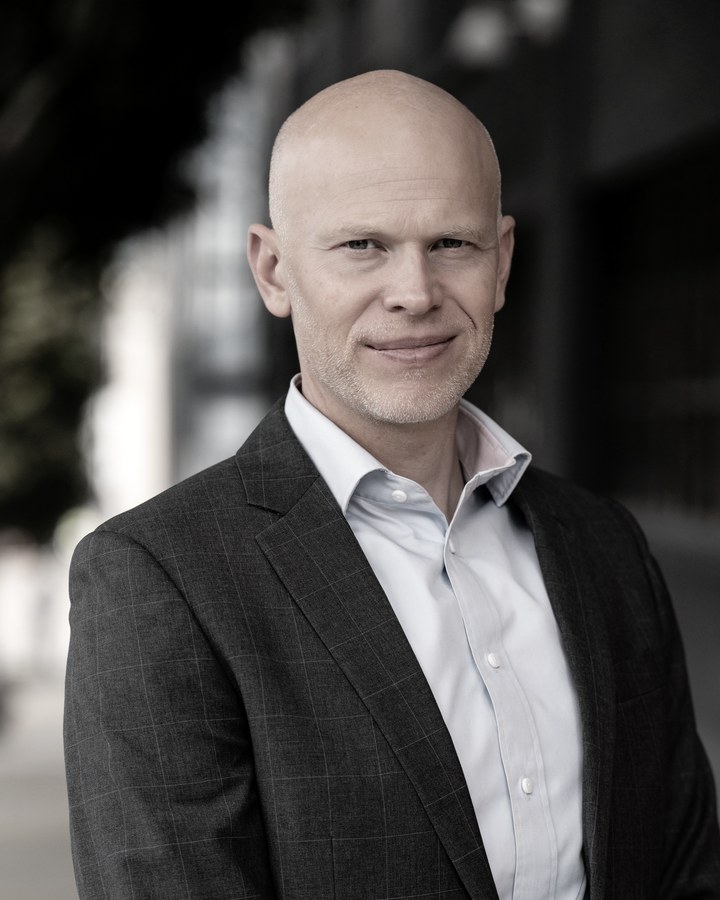
I have run clinical development three times from companies that could not afford a clinical development department. At GigaGen I designed and ran the first in-human study of a drug class that had never been in a person before, with a team that would have fit around one table.
At GigaMune I watched science I still believe in stall — not because it was wrong, but because getting it into the clinic cost more than a company our size could carry. That is the more common ending, and it is rarely the molecule's fault.
I built this because I kept hitting the same wall, and because the wall is made of work that software should be doing.
The entry point is a request for proposal on a specific early-phase study. We return a demonstrated study build against your draft protocol in days rather than the weeks a conventional CRO takes to return a bid.
djohnson@sarivera.com